World’s Largest Electronics Manufacturer Accelerates Plan To Replace Humans With Robots
adUnit = document.getElementById("google-ads-7I1D");
google_ad_client = "ca-pub-1897954795849722";
adUnit = document.getElementById("google-ads-7I1D");
adWidth = adUnit.offsetWidth;
if ( adWidth >= 999999 ) {
/* GETTING THE FIRST IF OUT OF THE WAY */
} else {
google_ad_slot = "0";
adUnit.style.display = "none";
}
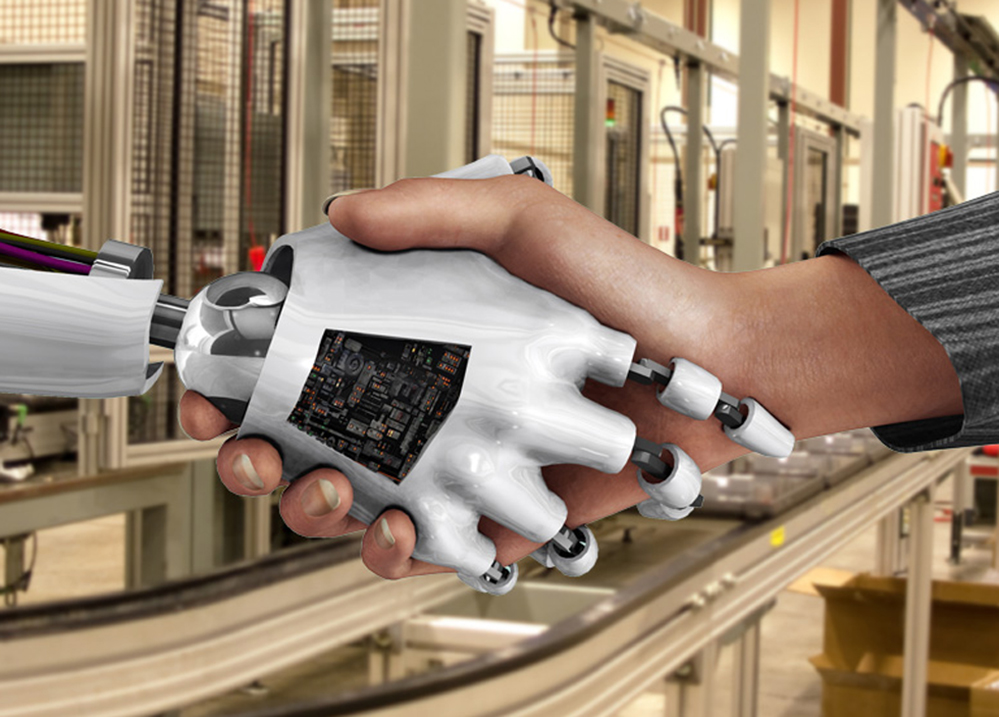
Foxconn might not be a company that is at the forefront of most American minds, but the products they create most certainly are. Christmas might not have been the same without considering purchases of Apple’s iPhone, some of Amazon’s Kindle products, or Microsoft’s Xbox to name but a few. The Taiwan-based company is the world’s leader in contract manufacturing of electronics with a market cap north of $100 billion; they have also become the third largest employer in the world with 1.3 million, which makes the following news that much more troubling.
Foxconn first rose to some level of notoriety – indeed infamy – when reports of human rights violations began to surface in the early part of this decade. Foxconn chose to remedy a spike in worker suicides during 2010-2011 at one of their Chinese plants by installing “suicide nets” so those subjected to slave-like conditions could remain on the plantation. Nevertheless, 2,000 workers rioted in 2012 amid charges of abuse by security guards making it doubtful that conditions had improved.
Now with the rise in automation, Foxconn is leading the way toward eliminating the need to deal with human employees altogether, demonstrating that the race to the bottom might end in factories filled exclusively with robots.
The general manager of Foxconn’s “automation committee,” Dai Jia-peng, recently discussed a three-phase plan to convert the human workforce into “Foxbots.”
Phase 1: “plans involve replacing the work that is either dangerous or involves repetitious labor humans are unwilling to do.” (Like the stuff that presumably could lead one being killed on the job or committing suicide – N.W.)
Phase 2: “involves improving efficiency by streamlining production lines to reduce the number of excess robots in use.”
Phase 3: “involves automating entire factories, ‘with only a minimal number of workers assigned for production, logistics, testing, and inspection processes,’ according to Jia-peng.”
(Source)
The program already has been implemented and is showing results. Melissa Dykes reported earlier this year that Foxconn had successfully eliminated 60,000 employees at just one of their factories. The three phases listed above are expected by Jia-peng to result in a 30% automation at all of its 12 Chinese factories as soon as 2020.
googletag.cmd.push(function() { googletag.display('div-gpt-ad-1470694951173-5'); });
(deployads = window.deployads || ).push({});