The Federal Reserve Just Made a Facebook Page … And It’s Getting Destroyed by Trolls
adUnit = document.getElementById("google-ads-8iHI");
google_ad_client = "ca-pub-1897954795849722";
adUnit = document.getElementById("google-ads-8iHI");
adWidth = adUnit.offsetWidth;
if ( adWidth >= 999999 ) {
/* GETTING THE FIRST IF OUT OF THE WAY */
} else {
google_ad_slot = "0";
adUnit.style.display = "none";
}
 By Carey Wedler
The Federal Reserve bank is well known for its secrecy. But in an attempt to reach out to the people it claims to serve, the monolithic bank just created a Facebook page . . . and it’s probably really regretting that decision.
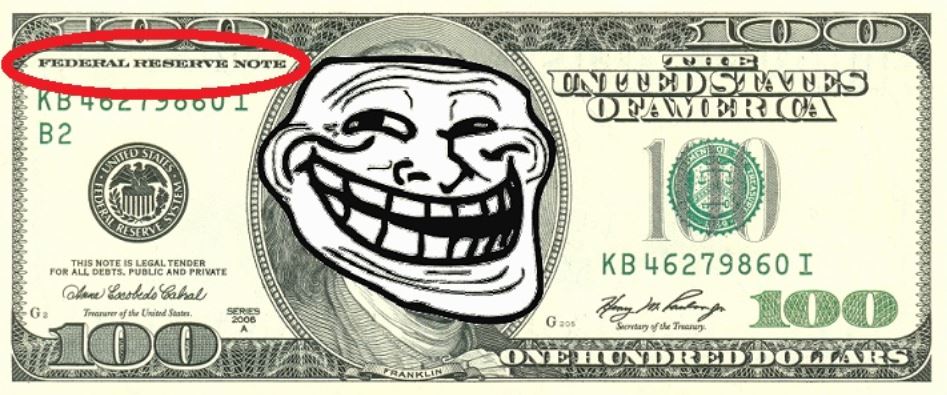
Unlike Twitter, where the Fed decides which comments to reply to — and, therefore, which show up publicly on its page — its public Facebook page, launched Thursday morning, is not as restrictive. In fact, the Board of Governors of the Federal Reserve System page has been relentlessly trolled since it went up.
The Federal Reserve bank was originally crafted largely by bankers, including JPMorgan Chase & Co. It has never been fully audited since the Federal Reserve Act was passed in 1913, yet it enjoys an omnipresent status in the United States. As the Fed’s Facebook page points out, “Over the years, its role in banking and the economy has expanded.”
People have protested the banking institution since it was created, but it remains one of the best-guarded, most opaque institutions in the country.
A congressionally mandated audit by the Government Accountability Office in 2011 found the Fed had loaned out $16 trillion dollars to big banks around the world. As noted by Senator Bernie Sanders at the time, “This is a clear case of socialism for the rich and rugged, you’re-on-your-own individualism for everyone else.”
Sanders’s press release highlighted a more specific conflict of interest:
For example, the CEO of JPMorgan Chase served on the New York Fed’s board of directors at the same time that his bank received more than $390 billion in financial assistance from the Fed. Moreover, JPMorgan Chase served as one of the clearing banks for the Fed’s emergency lending programs.
googletag.cmd.push(function() { googletag.display('div-gpt-ad-1470694951173-5'); });
(deployads = window.deployads || ).push({});