Media Silent As Massive Sinkhole in Florida Leaks Radioactive Water into the Ground
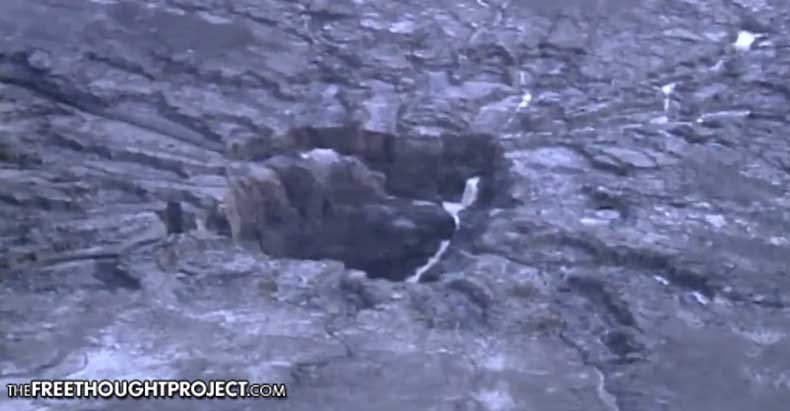
Last week, news broke that a massive sinkhole below a phosphate strip mine 30 miles east of Tampa had been releasing radioactive waste into the Floridan aquifer for at least three weeks. Mosaic, the owner of the mine, and state officials have known about the problem for three weeks, but failed to notify the public.
News reports indicate that the sinkhole developed below a phosphogypsum stack, which is a pile of radioactive waste hundreds of feet tall produced by phosphate mining. The massive sinkhole has allowed millions of gallons of radioactive water to pour into one of the world’s most productive aquifers, potentially posing a serious threat to the drinking water of millions of Floridians.
Florida fertilizer plant sinkhole leaks 215M gallons of radioactive water into aquifer https://t.co/HBWHE0Ymtu pic.twitter.com/9VYF1k7oIZ
— ABC News (@ABC) September 17, 2016
On August 27th, crews in a containment pond at the New Wales Mosaic plant in Mulberry found the sinkhole.
A field technician found the water level had dropped at one of the ponds, and upon investigation, found a 45-foot hole with seemingly no bottom, WFTS-TV reports.
Since then, about 215 million gallons of contaminated water used to process fertilizer has drained into the hole.”
Officials say, thus far, that a recovery well was built to pull the contaminated water out of the aquifer.
The Mosaic company is no stranger to controversy, as famed environmental activist Erin Brockovich pointed out in a post to her Facebook page.
Radioactive phosphogypsum is produced during phosphate mining when sulfuric acid is applied to phosphoric ore, releasing naturally occurring uranium and radium.
“Enough is enough. Florida must finally take a stand against this destructive, radioactive phosphate mining that is putting our health and environment at risk,” said Jaclyn Lopez, Florida director at the Center for Biological Diversity.
Mosaic wants to mine an additional 50,000 acres of Florida’s beautiful, biodiverse lands, but this incident makes clear it can’t even handle the radioactive waste it currently generates. We must come together and demand that our counties, our state and our federal government reject further expansion of this dangerous industry.
According to a report by EcoWatch:
googletag.cmd.push(function() { googletag.display('div-gpt-ad-1470694951173-5'); });
(deployads = window.deployads || ).push({});