FDA Hypocrisy on Marijuana and Prescription Drugs Is Worse Than We Thought
By Carey Wedler
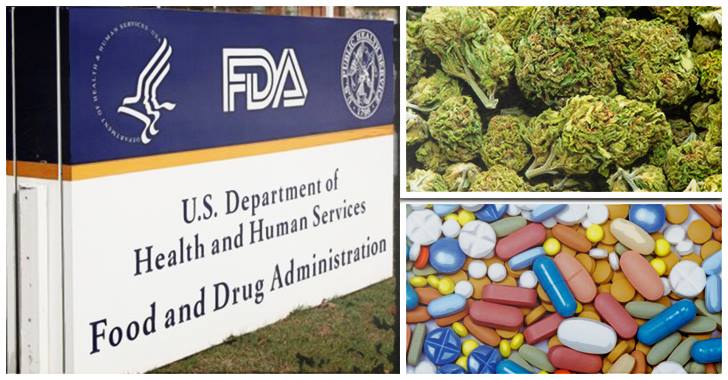
One-third of FDA-approved drugs were later found to have safety risks, according to a recent analysis of drugs cleared by the agency between 2001 and 2010.
According to the study, published in the Journal of the American Medical Association, “Among 222 novel therapeutics approved by the FDA from 2001 through 2010, 71 (32.0%) were affected by a postmarket safety event.”
A postmarket safety event includes “(1) withdrawals due to safety concerns, (2) FDA issuance of incremental boxed warnings added in the postmarket period, and (3) FDA issuance of safety communications.”
The researchers, many of them from Yale University, found these events were more common among biologic and psychiatric drugs, as well as those granted access to the FDA’s expedited approval process. The Washington Post summarized the researchers’ findings:
Three of the drugs were withdrawn from the market. The FDA also required 61 new black-box warnings — the agency’s most serious safety alert, included in the drug’s packaging — and issued 59 safety communications to inform doctors and consumers about newly identified concerns. Some products had more than one boxed warning added or safety communication issued over the time of the study.
According to lead researcher Joseph Ross, an associate professor of medicine and public health at Yale University, one of the main reasons for these failures is the public’s desire for quick access to pharmaceuticals.
“We seem to have decided as a society that we want drugs reviewed faster,” he told the Post, adding that for this reason, it’s vital “that we have a strong system in place to continually evaluate drugs and to communicate new safety concerns quickly and effectively.”
Further, according to a 2014 study published in the British Medical Journal, the industry directly funds the FDA, and this is likely a factor in the agency’s willingness to approve pharmaceutical drugs. That study explained:
In 1992, because of widespread concern that the US Food and Drug Administration was taking too long to approve drugs, the Prescription Drug User Fee Act (PDUFA) was enacted, authorizing the FDA to collect user fees from drug companies to expedite the approval process. Besides providing funding for an increased FDA staff, the act established performance goals during the approval process to ensure more rapid review.
googletag.cmd.push(function() { googletag.display('div-gpt-ad-1470694951173-5'); });
//tags-cdn.deployads.com/a/activistpost.com.js
(deployads = window.deployads || ).push({});