Dozens of Congressmen Speak Out Against Tyranny — Tell DEA Not to Ban Kratom
By Matt Agorist
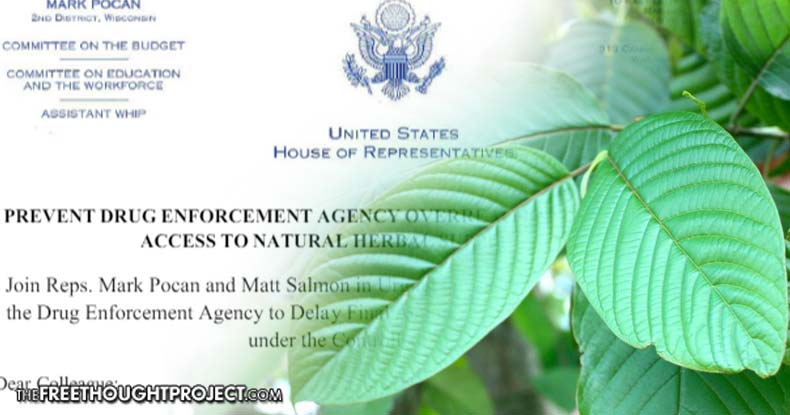
As the Free Thought Project reported earlier this month, the U.S. Drug Enforcement Agency (DEA) announced they will ban the popular pain relief supplement kratom by placing it on the Schedule 1 list, which denotes “no currently accepted medical use and a high potential for abuse” – the most restrictive classification under the federal Controlled Substances Act. However, the tyranny of the DEA is now being questioned by Congress.
According to US News, Reps. Mark Pocan, D-Wis., and Matt Salmon, R-Ariz., recruited 45 signers in the House of Representatives on Friday afternoon for two letters, which will be sent Monday to Chuck Rosenberg, acting administrator of the Drug Enforcement Administration, and Office of Management and Budget Director Shaun Donovan.
This move to ban yet another highly beneficial plant by the DEA has been met with heavy backlash and multiple petitions. The backlash is entirely justified as this plant has many amazing benefits — including a potential cure for opioid addiction.
“This significant regulatory action was done without any opportunity for public comment from researchers, consumers and other stakeholders,” the lawmakers say in the letter to Rosenberg. “This hasty decision could have serious effects on consumer access and choice of an internationally recognized herbal supplement.”
The DEA’s tyrannical move to ban this amazing and beneficial plant comes on the heels of peer-reviewed research showing that kratom could potentially be a much safer alternative to deadly prescription opioids.
The latest research indicates that the main component of the herb, the alkaloid mitragynine, and its metabolite and oxidation product, 7-hydroxymitragynine, produce an effect on certain opioid receptors separate from many of the mechanisms that precipitate many opioid side effects.
According to US News, preliminary scientific analysis shows that kratom, despite DEA concern about safety and anecdotal reports about dependence potential, could offer substantial harm reduction — particularly as accidental overdoses of opioids including legal painkillers and illegal drugs like heroin killed more than 28,000 in 2014 alone.
Countless patients currently using kratom to treat their heroin, alcohol, and cocaine addictions, fibromyalgia patients, and people with arthritis and cancer would no longer be able to use this plant — and instead be forced back into dangerous pharmaceuticals or the black market.
googletag.cmd.push(function() { googletag.display('div-gpt-ad-1470694951173-5'); });
//tags-cdn.deployads.com/a/activistpost.com.js
(deployads = window.deployads || ).push({});